Altitude sickness in Cusco is one of the most common worries for travelers heading to Machu Picchu. It makes sense. Cusco sits at about 11,150 feet (3,400 meters). Most visitors fly in from near sea level in just over an hour.
The good news is that most people adjust well with a little planning. In this guide, you’ll learn what altitude sickness feels like and how to acclimatize. You’ll also see how to plan your Machu Picchu day around it. This guide shares general travel tips only. Talk to your doctor before your trip, especially if you have a health condition.
What Altitude Sickness in Cusco Feels Like
At high altitude, the air holds less oxygen. Your body needs time to adjust. Until it does, you may feel some symptoms. Locals call it soroche.
The most common form is acute mountain sickness. The CDC compares it to a hangover. Common signs include:
- Headache
- Tiredness
- Nausea or loss of appetite
- Trouble sleeping
- Shortness of breath when you exert yourself
For most travelers, symptoms are mild. They often ease within a day or two. Being fit doesn’t protect you. Anyone can feel the altitude, at any age.
When to get help
Serious forms of altitude illness are rare, but they need fast care. Seek medical help right away if someone has trouble breathing while resting, confusion or problems with balance. Going down to a lower altitude is the main treatment. Cusco has clinics used to helping travelers.

How to Acclimatize Before Machu Picchu
Your body does most of its adjusting during the first few days at altitude. A few simple choices make a big difference.
1. Give yourself time
Plan at least one or two easy days before any big activity. Walk slowly. Rest when you need to. Save the long hikes for later in your trip.
2. Start lower if you can
The Sacred Valley sits lower than Cusco, at about 9,500 feet (2,900 meters). Many travelers sleep there for their first nights. Then they visit Cusco after they’ve adjusted. It’s a gentle way to ease into the Andes.
3. Build simple habits
- Drink plenty of water throughout the day.
- Eat light meals, especially at first.
- Limit alcohol during your first days.
- Climb stairs and hills at a slow, steady pace.
Many locals drink coca tea, and you’ll see it in most hotels. It’s part of Andean culture. Keep in mind that coca leaves aren’t allowed into the United States, so don’t pack any for home.
4. Talk to your doctor
Ask your doctor whether altitude medication makes sense for you. This is especially important for children, pregnant travelers and anyone with heart or lung conditions. Your doctor can give advice based on your health and your itinerary.
Planning Your Machu Picchu Day Around the Altitude
Here’s a fact that surprises many travelers. Machu Picchu sits lower than Cusco, at about 7,970 feet (2,430 meters). Many people feel better there than in the city.
Still, the citadel has many stone stairs and uneven paths. A few tips help:
- Schedule Machu Picchu after you’ve had time to adjust.
- Start the day rested and well hydrated.
- Walk at your own pace and take breaks.
- Think twice before adding a mountain hike. Machu Picchu Mountain rises to about 10,100 feet (3,080 meters). That’s a steep climb if you’re still adjusting.
Weather can change quickly in the mountains. Bring layers and rain gear, and plan for the conditions of the season.
How Good Life Expeditions Supports You
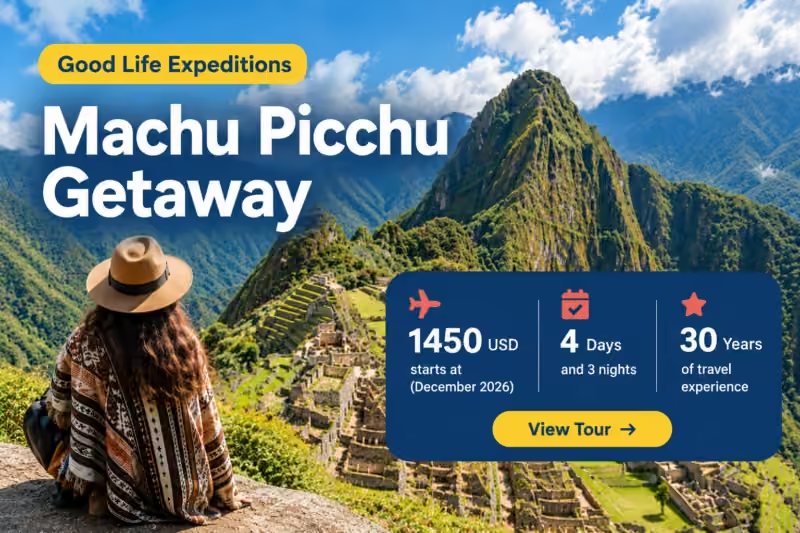
With the Machu Picchu Getaway, you don’t need to juggle tickets, trains or buses while your body adjusts. Our team handles your entry ticket, your train, your bus and a local expert guide. Hotels, transfers and several meals are included too.
Your guide sets a pace that works for your group. They’ll suggest where to rest and how to move through the site comfortably. The itinerary also gives you time to adjust. You visit Machu Picchu on day three, after a day in Cusco and a night in Aguas Calientes, which sits lower. You can read more about our travel insurance options for extra peace of mind.
Good Life Expeditions is the travel brand of MEDLIFE. A part of what you invest in your trip stays in Peru and helps fund MEDLIFE’s projects in local communities.
Traveling with kids? See our Peru family vacation guide. Want to add more destinations? Explore our Peru itinerary beyond Machu Picchu.
Breathe Easy and Enjoy the Andes
The altitude is part of what makes this region so breathtaking. With time to adjust and the right support, you can enjoy every moment of it. Let us plan the details, so you can focus on the views.
contact our team for a personalized itinerary.
FAQ: Altitude Sickness in Cusco
Is Machu Picchu higher than Cusco?
No. Machu Picchu sits at about 7,970 feet (2,430 meters). Cusco sits higher, at about 11,150 feet (3,400 meters).
How long does it take to acclimatize in Cusco?
Many travelers feel better after a day or two. According to the CDC, the body’s main adjustment happens over the first three to five days at altitude.
Can children get altitude sickness?
Yes. Children can feel the altitude too, and younger kids may not explain their symptoms clearly. Talk to your pediatrician before the trip and watch for changes in mood, sleep or appetite.