In the markets of Cusco and the villages of the Sacred Valley, you’ll hear a language that sounds nothing like Spanish. It’s Quechua, the language of the Inca, still spoken by millions of people in the Andes today. Learning even a few words is one of the kindest ways to connect with the people you meet.
In this guide, you’ll learn a little about the history of Quechua and where it’s spoken. You’ll discover simple greetings, thank-yous and everyday words you can use on your trip. You’ll also find tips on pronunciation and respectful use. A smile and a few words in Quechua can open many doors, from busy markets to quiet village homes.
What Is Quechua?
Quechua is a family of Indigenous languages from the Andes of South America. It was the main language of the Inca Empire, which used it to connect people across a huge territory. The Inca called their language Runa Simi, which means “the people’s language.”
Today, Quechua is spoken in Peru, Bolivia, Ecuador and parts of Argentina, Chile and Colombia. In Peru, it’s an official language, alongside Spanish and other Indigenous languages. Many people in the Cusco region grow up speaking both Quechua and Spanish.
Different varieties
Quechua has many regional varieties. Words and spellings can change from one area to another. The words in this guide are commonly used in the Cusco region. Locals will appreciate your effort, even if your pronunciation isn’t perfect.
Basic Quechua Words and Phrases
Greetings
- Allillanchu? – Hello, how are you?
- Allillanmi. – I’m fine.
- Imaynalla kashanki? – How are you?
- Tupananchiskama. – See you later.
Being polite
- Sulpayki or Añay – Thank you. Both are used in the Cusco area.
- Ari – Yes.
- Mana – No.
Useful everyday words
- Unu – Water
- Mikhuy – Food or to eat
- Wasi – House
- Inti – Sun
- Killa – Moon
- Mayu – River
- Urqu – Mountain
- Pacha – Earth or world
Words you already know
Some English words come from Quechua. Llama, puma, condor and quinoa all have Quechua roots. Even “jerky” comes from the Quechua word ch’arki, meaning dried meat. Many place names also come from Quechua. Cusco, Pisac and Ollantaytambo all carry Quechua roots, and your guide can explain what they mean.
Tips for Using Quechua on Your Trip
- Start with a greeting. A simple “Allillanchu” often brings a big smile.
- Say thank you. “Sulpayki” is easy to remember and always appreciated.
- Listen first. Notice how locals greet each other and follow their lead.
- Don’t worry about mistakes. People appreciate the effort, and many will gladly help you.
- Learn some Spanish too. Spanish is spoken everywhere and is useful for daily needs.
- Be respectful. Quechua is a living language with deep cultural meaning. Use it with care and curiosity.
Pronunciation basics
Quechua has sounds that may be new to you. Some letters, like q and k, are pronounced in the back of the throat. An apostrophe, as in ch’arki, marks a sharper sound. Don’t stress about getting every sound right. Your guide can help you practice.
Want to understand more about local culture? Learn about the weaving communities of the Andes and the history of Cusco.
Hear Quechua on Your Trip With Good Life Expeditions
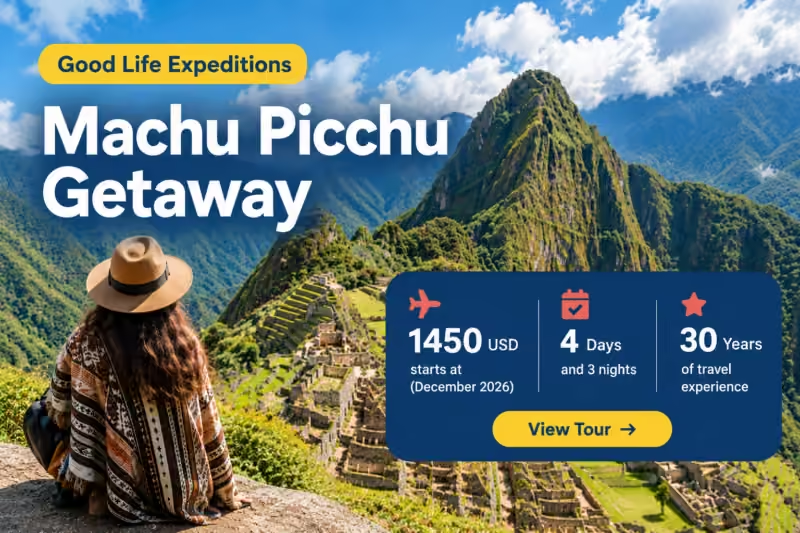
On our Machu Picchu Getaway and Classic Peru tours, you’ll explore Cusco, the Sacred Valley and Machu Picchu with local expert guides. Many of our guides grew up in the region and can teach you a few words along the way.
You’ll hear Quechua in markets, in villages and in the names of the places you visit. Machu Picchu itself is a Quechua name, meaning “old mountain.”
Good Life Expeditions is the travel brand of MEDLIFE. A part of what you invest in your trip stays in Peru and helps fund MEDLIFE’s projects in local communities. Curious about traveling with care? Read how to practice responsible travel.
FAQ: Quechua
Is Quechua still spoken in Peru?
Yes. Millions of people in Peru speak Quechua, especially in the Andes. It’s an official language of the country.
How do you say thank you in Quechua?
In the Cusco region, people often say “sulpayki” or “añay.”
Do I need to learn Quechua to visit Peru?
No. Spanish is widely spoken, and many tourism workers speak English. Learning a few Quechua words is a kind gesture that locals appreciate.
Connect Through Language
A few words of Quechua can turn a quick exchange into a warm moment. It shows respect for the people and history of the Andes. Let us plan a trip full of real connections.
Contact our team to plan your Peru trip.